
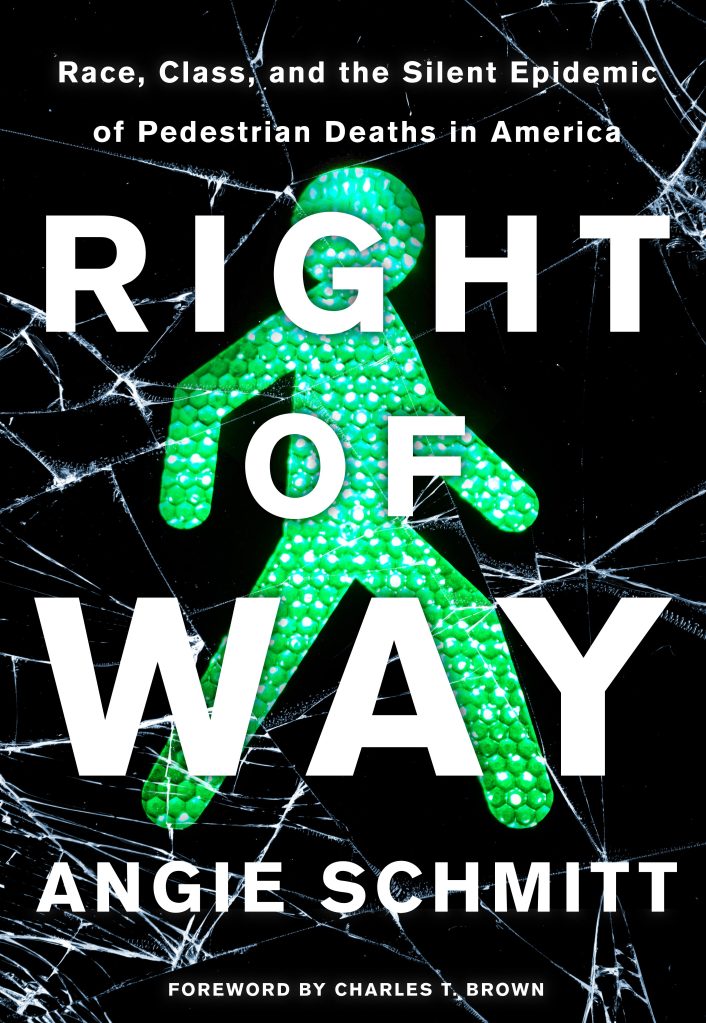
RIGHT OF WAY
Angie Schmitt’s Right of Way looks at the ways in which pedestrian deaths are not really accidents, but the result of ignoring pedestrian safety when we design our cities, roads and vehicles. Pedestrian fatalities in the U.S. increased a shocking 80% between 2009 – 2023! While Schmitt’s book focuses on the U.S., Canadian road planning and the kinds of vehicles we drive are not so different, although Canadian pedestrian fatality rates have not seen the huge increases of the U.S. In an interview with StreetsblogUSA, Schmitt talks about her work on the book, and cites Neil Arason’s book No Accident, which looks at safety through a Canadian lens. In a recording made during the pandemic lockdown, Schmitt discusses her research with students from the University of Pittsburgh’s School of Education.
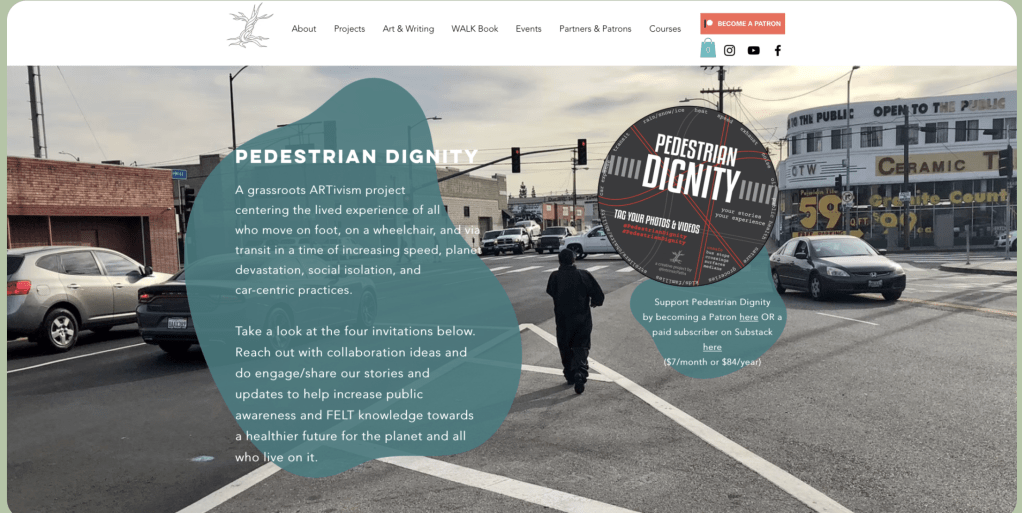
PEDESTRIAN DIGNITY
Pedestrian Dignity seeks to raise awareness about issues related to being a pedestrian. Created by Jonathon Stalls, whose book WALK: Slow Down, Wake Up, and Connect at 1 – 3 Miles Per Hour was published in 2022, Pedestrian Dignity encourages collaborations and shares information about walking from all over the U.S. In addition to the website, you can find them on Instagram.
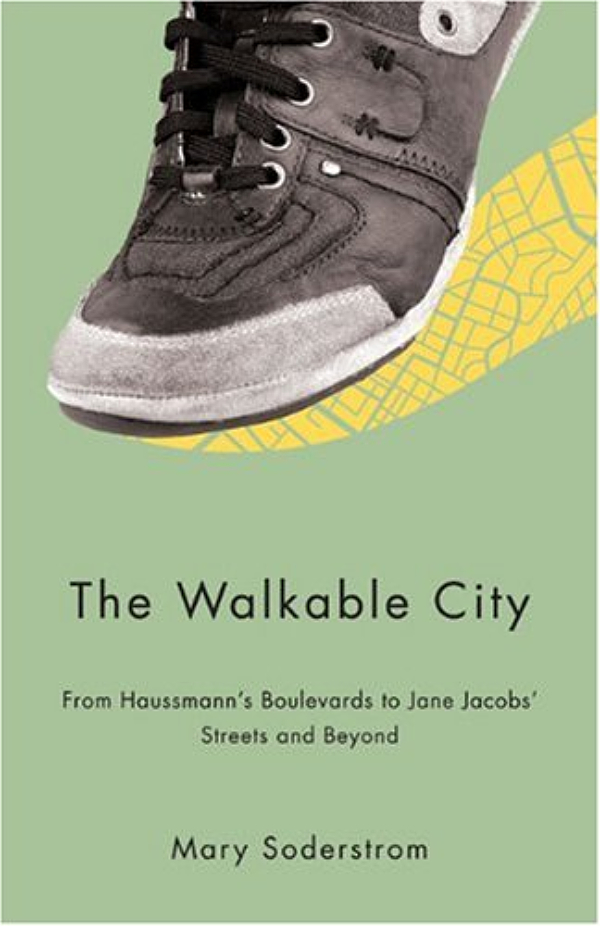
(THE) WALKABLE CITY x 3
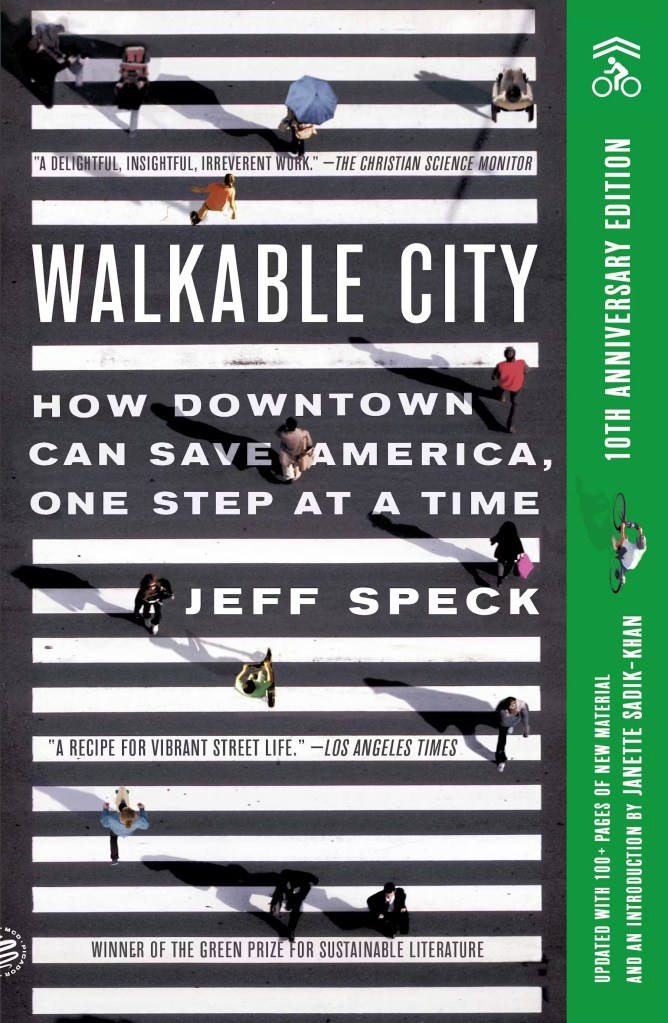
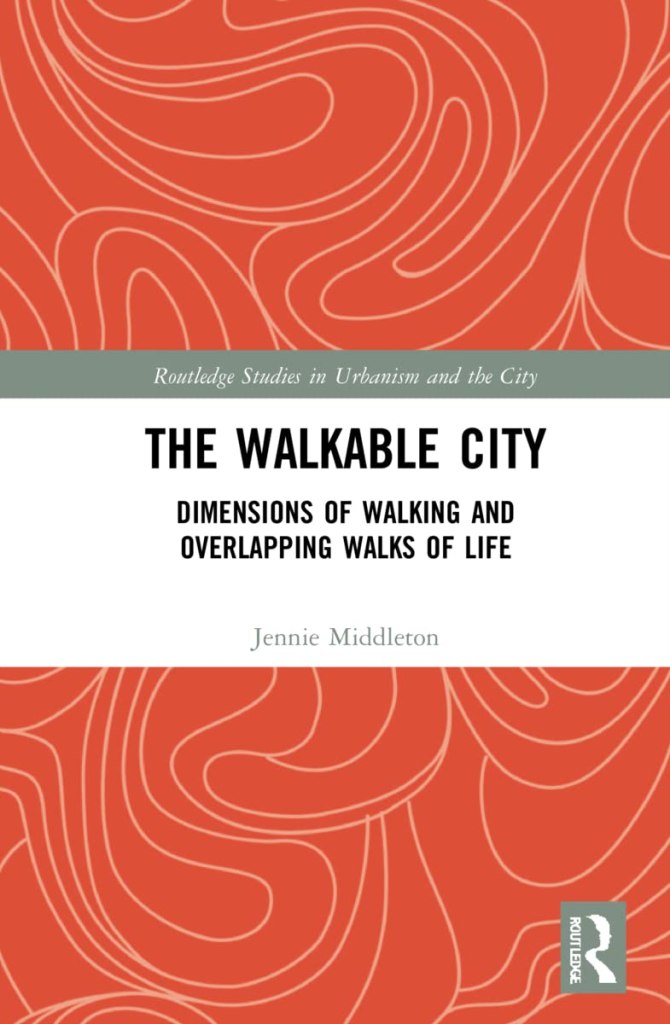
Three books with similar titles that look at how urban planning impacts our experiences as pedestrians. Mary Soderstrom’s The Walkable City (2008) takes us through Paris, New York, Toronto, North Vancouver and Singapore, and examines how cities have changed the lives of ordinary citizens – in positive and negative ways. Soderstrom spoke with Pedestrian Space about the book. Jeff Speck’s Walkable City (2012) lays out a practical vision on how to make cities the best they can be. An expanded 10th anniversary edition was published in 2022 and reviewed by Urban Design Lab. Aimed at an academic readership, Jennie Middleton’s The Walkable City (2023) looks at everyday walking in contemporary urban life, and brings together theoretical and empirical insights to understand how urban spaces can be imagined, planned for, and experienced.
THE PLODCAST
When I go for a walk, it’s often to the soundtrack of a podcast. I realise having headphones on splits my attention between where I am and where the podcast takes me, and I miss out on the sounds of the environment I’m in and send signals to others not to approach. This is not ideal. But I value what I learn in the podcasts, and I doubt I would otherwise carve out time to listen to them. The Plodcast from the BBC’s Countryfile Magazine is a series of conversations that take place between people as they’re out walking, e.g. #228 “A walk with Robert Macfarlane along a Cambridge chalk stream to its magical spring”, or #305 in which Sophie Pavelle walks along the River Otter and explains “why some species work together, while others exploit host animals as parasites.” I’ll likely never go for a walk with Robert Macfarlane or Sophie Pavelle, but The Plodcast gives me a sense of what that might be like.
THE ROAD IS HOW
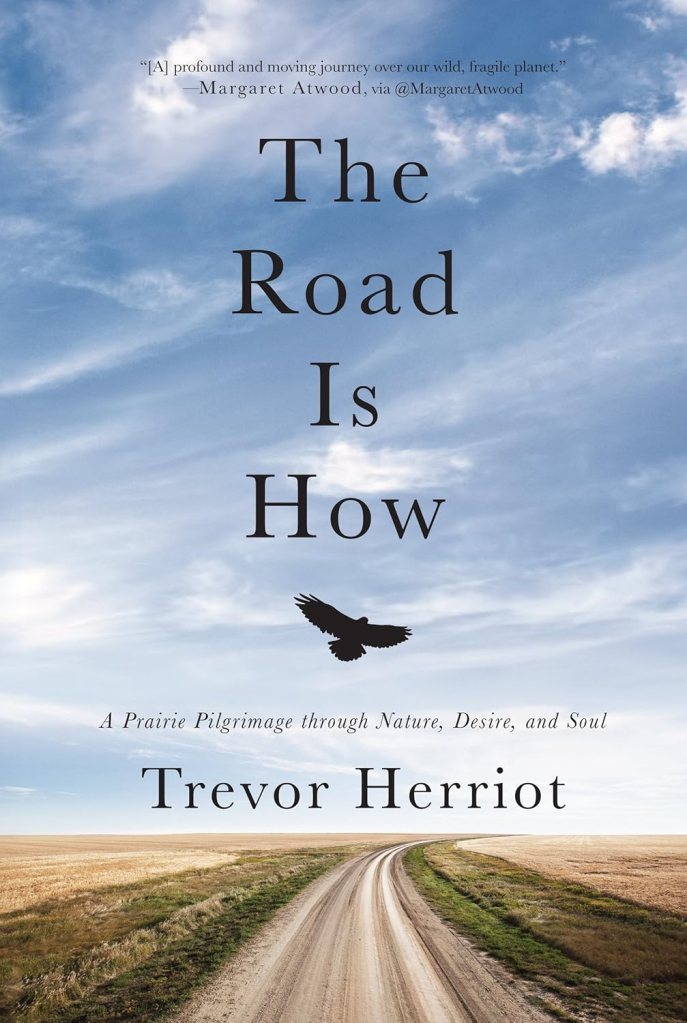
In The Road Is How, Trevor Herriot writes about how while still recovering from an accident, he made a three day walk from his home in Regina to a cabin his family has at Cherry Lake. Trevor is a wonderful writer and attentive observer of the natural world; Daniel Baird in The Walrus called him “the pre-eminent prairie naturalist of his generation”. His book River In A Dry Land, which traces the path of the Qu’appelle River across Saskatchewan, is one of my all-time favourite books about the region I live in and his regular appearances on CBC Saskatchewan’s Birdline are monthly radio highlights as he generously provides bird watchers across Saskatchewan with information and tips. The Road Is How was published in 2014, and is still available as a digital book (I found a used hardback copy online).
WRITERS ON WALKS
BBC Radio 3 has collected a series of its program The Essay into the audio book Writers on Walks. 22 contributors, “an array of novelists, poets, journalists and biographers chart the varied and inspiring walks they have taken around Britain and elsewhere”, gathered into categories like Dawnwalks & Night Walks, Springwalks & Winterwalks, and Strange Strolls. Among the contributors is Robert Macfarlane, whose book The Old Ways is profiled on the Resources page; Macfarlane’s essay is an account of his five day walk along the length of the South Downs.
RIGHT ON RED
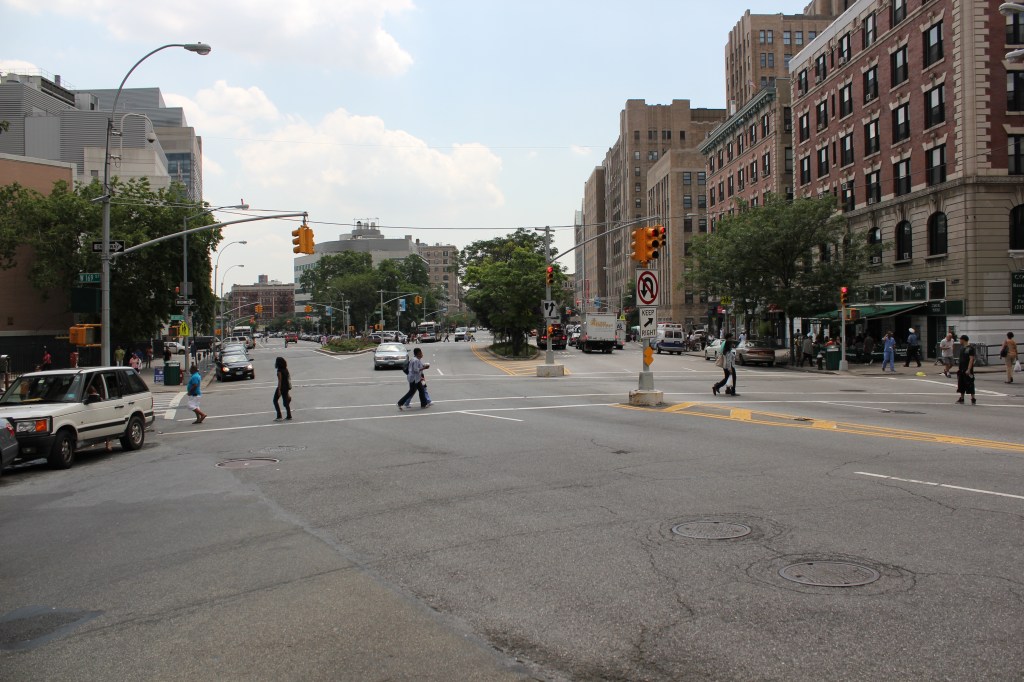
If you’ve walked in a North American city, there’s a good chance you’ve witnessed and/or experienced something similar to that of Ratso and Joe in Midnight Cowboy – a driver makes a right hand turn without looking for pedestrians. In Canada, there are an average of 300 pedestrian fatalities every year, and thousands of injuries (of course not all of these vehicle-pedestrian collisions are the sole fault of drivers, pedestrians too have responsibilities to observe traffic signals). The pedestrian fatality rate in Canada is close to 8 per million people, compared to European countries like Sweden, Finland, and the Netherlands, whose rate is under 3 per million. Clearly, Canada could be doing better than we are. In Canada, almost 1/4 of pedestrian fatalities occur at intersections.
There are changes that can be made to improve the situation for pedestrians at intersections, but they require a municipality to make pedestrian safety a priority. In Toronto and some other cities in Canada, the Leading Pedestrian Interval (LPI) aka Pedestrian Head Start Signal gives pedestrians a walk signal several seconds ahead of the vehicular green light, meaning pedestrians are able to get several steps into the intersection and be more visible before vehicles are legally allowed to move. I encountered an LPI in Regina at the intersection of Albert Street and Regina Avenue, and I hope there are plans for more.
Another way to improve things for pedestrians is to prohibit vehicles turning right on red lights. This means vehicles have to come to a full stop at red lights and can’t proceed until they have a green light, instead of the all-too-common practice of vehicles making right turns without slowing sufficiently and checking to see if there are pedestrians at the intersection. No right on red is the common practice in most of Europe but not in North America apart from a few places including the island of Montreal; more jurisdictions are looking at making this change. In Regina, there are some intersections, mostly around schools, that don’t permit right turns on red. An advance green for pedestrians and/or a restriction on right turns on red won’t prevent the type of aggressive driver who almost hits Ratso in Midnight Cowboy, but they will still make crossing the street safer for pedestrians. Shouldn’t that always be a goal?
IAIN SINCLAIR
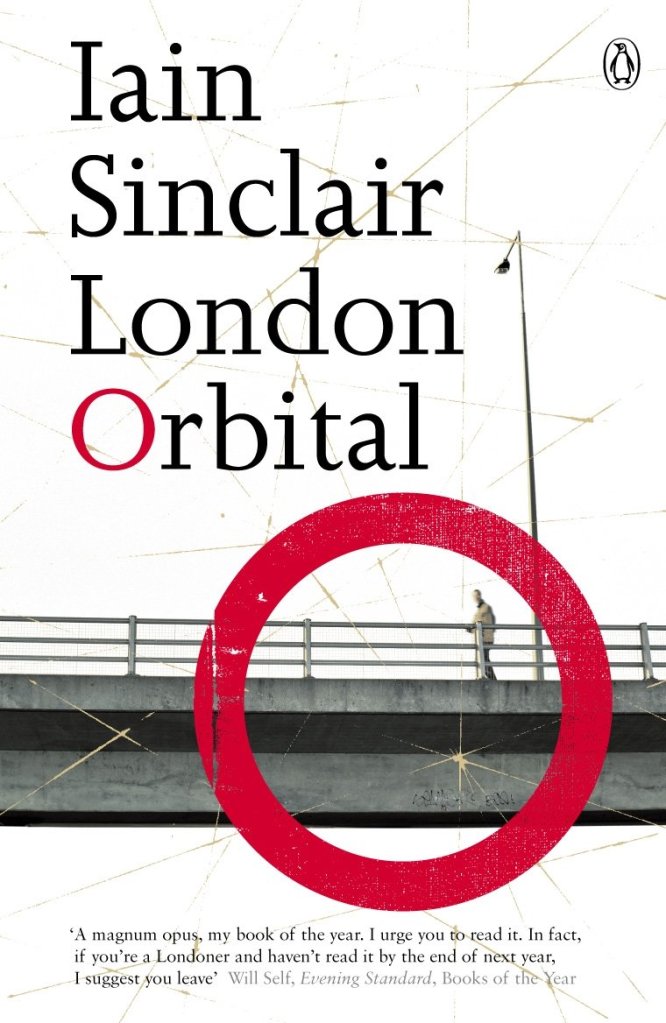
Iain Sinclair has spent decades roaming the British capital on foot and excavating the city’s psychogeography in books such as London Orbital, where he follows the route of the M25 motorway, and London Overground, where he walks alongside the city’s Overground rail network. Sinclair has said that 2017’s The Last London is his final book about the city. In an interview with Teresa O’Connell in Guernica magazine, Sinclair said, “Walking is increasingly a sort of final democracy. The weight of what’s being [politically] imposed is very much anti-walking, and has to do with control of space, creating public areas you can’t walk in—which are completely covered by surveillance, policing, private spaces, gated communities, and unexplained entities at the edge of things. So walking around becomes actually difficult. But the walking process is the oldest natural form of movement. It puts you literally in touch with the earth and the weather around you and allows you to get into conversation with people as you move, which seldom happens in the other ways we move. The conversations I see cyclists get into are arguments, crashes, rows, and the walker’s not in that. The walker exists in a long tradition, and, for me, it’s really vital to simply be out there every day—not only because it feels good, but because in doing it you contribute to the microclimate of the city. As you withdraw energy from the city, you are also giving energy back. People are noticing you. You’re doing something, you’re there, the species around you absorb your presence into it, and you become part of this animate entity called the city.” You can find videos of Iain Sinclair walking through London over at John Rogers’ YouTube channel.
ROBERT MACFARLANE
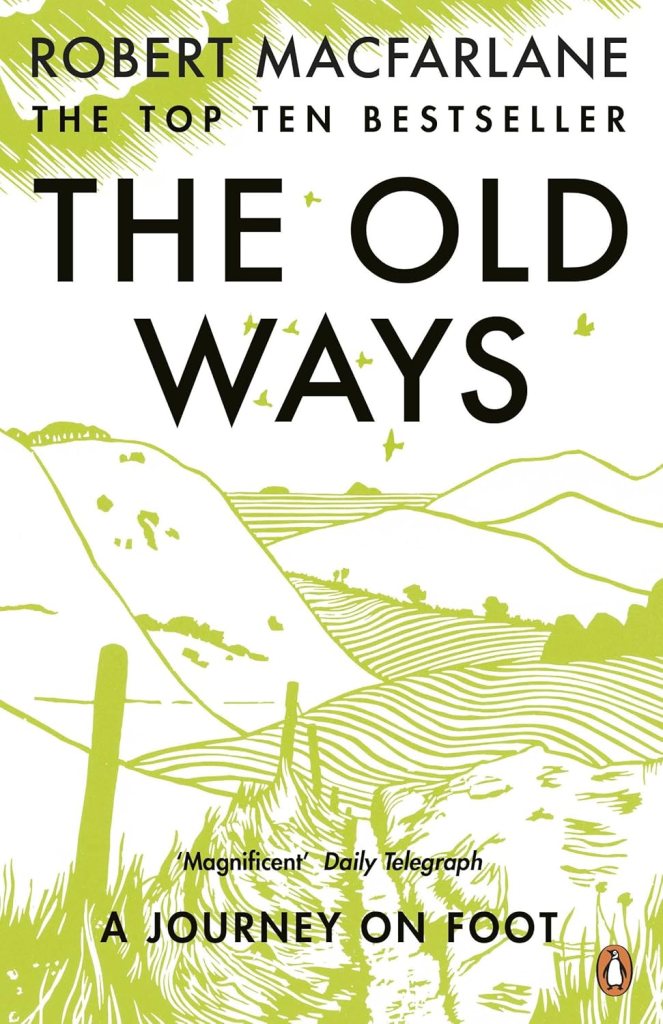
Robert Macfarlane has walked in places I never will and his books about his journeys – most of which take place on foot – have been some of my favourites over the past decade or so; he’s a wonderful writer. Macfarlane described his third book The Old Ways (2012) as being about, “the relationship between paths, walking and imagination”. You can hear him talk about The Old Ways in this London Review Bookshop podcast and follow him on Instagram.
WALKING WITH CELINE AND JESSE
There have been many films that place walking at the heart of the story. Two favourites that feature characters on foot are Richard Linklater’s Before Sunrise (1995), in which the main characters Celine (Julie Delpy) and Jesse (Ethan Hawke) get to know one another while walking around nocturnal Vienna, and Before Sunset (2004), when the two characters meet again and walk through Paris. These films beautifully evoke the pleasures of walking and talking. While I’ve yet to make it to Vienna, I’ve been fortunate to be able to spend time in Paris and in 2009 I was there with a 16mm Bolex camera on a cinematic pilgrimage to visit the locations of a number of films shot in Paris, including Before Sunset. As I traced the walk taken by Celine and Jesse it soon became apparent that the distances between the locations do not make for a plausible route given the time constraints of the story – Jesse has a plane to catch – not that it affects my appreciation of the film. You can find my pilgrimage film Cinephile on Vimeo.
WALKING THE BYPASS
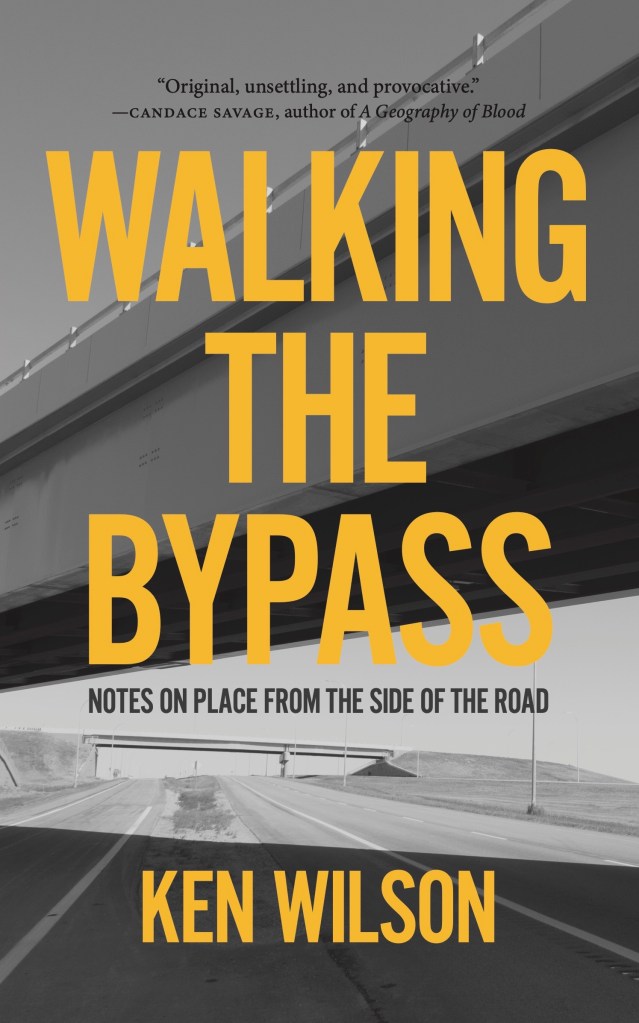
Ken Wilson’s book Walking The Bypass: Notes On Place From The Side Of The Road was released in October 2025 by University of Regina Press. In its manuscript form, Ken received the 2022 City of Regina Writing Award. Dan Piepenbring writes about Walking The Bypass in Harper’s Magazine. Ken has been a source of inspiration, and a generous resource on walking-related matters, and I really enjoyed talking with Ken about the book and his walking experiences, and going for a walk with Ken along a part of the Regina Bypass, which provides the route for Walking The Bypass. You can follow Ken on his ongoing blog Reading and Walking, his website, and on Instagram.
JOHNNY STRIDES
Johnny Strides is the handle of John Hicks, who’s been posting videos of his walks – mostly in Toronto but elsewhere as well – since before the COVID pandemic. His YouTube channel has thousands of videos and he’s adding more on a daily basis. CBC Toronto spoke to him about what he does. You can also find him on Instagram.
FLÂNEUSE & STRAGGLE
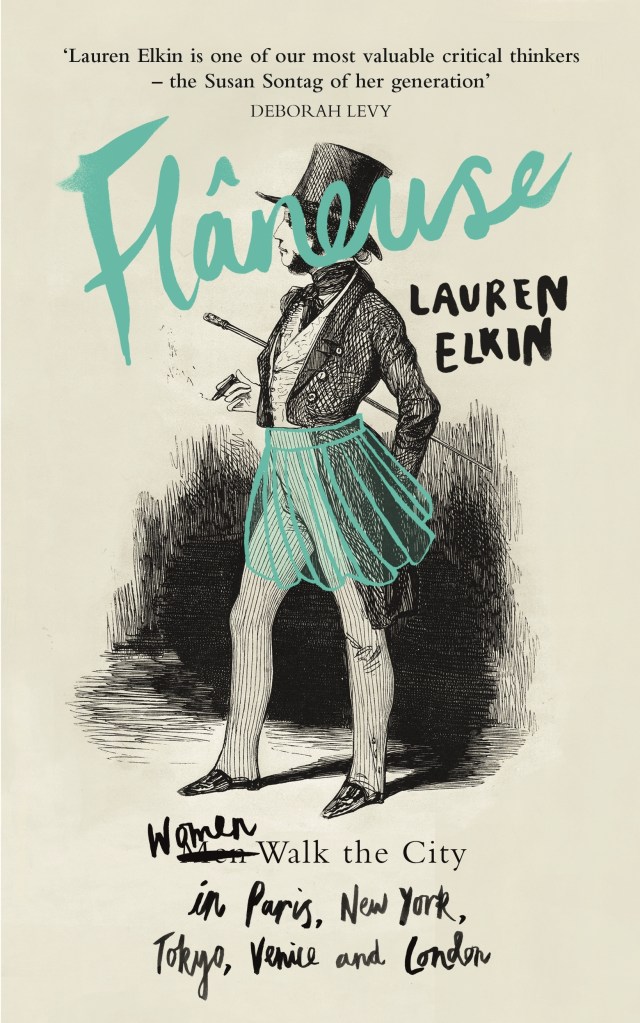
I was first introduced to the word flâneur and the ideas behind it in grad school. In learning about it, I realised in many ways flânerie described behaviour I’d be pursuing for some time: leisurely strolling through cities, observing the variety of activities an urban environment offers. It’s one of the things I most enjoy about walking. Of course I fit the original conception of the flâneur: male, and of an economic class and skin colour that permitted them/me the liberty to walk the streets without concern and without raising concerns among the power structures of society.
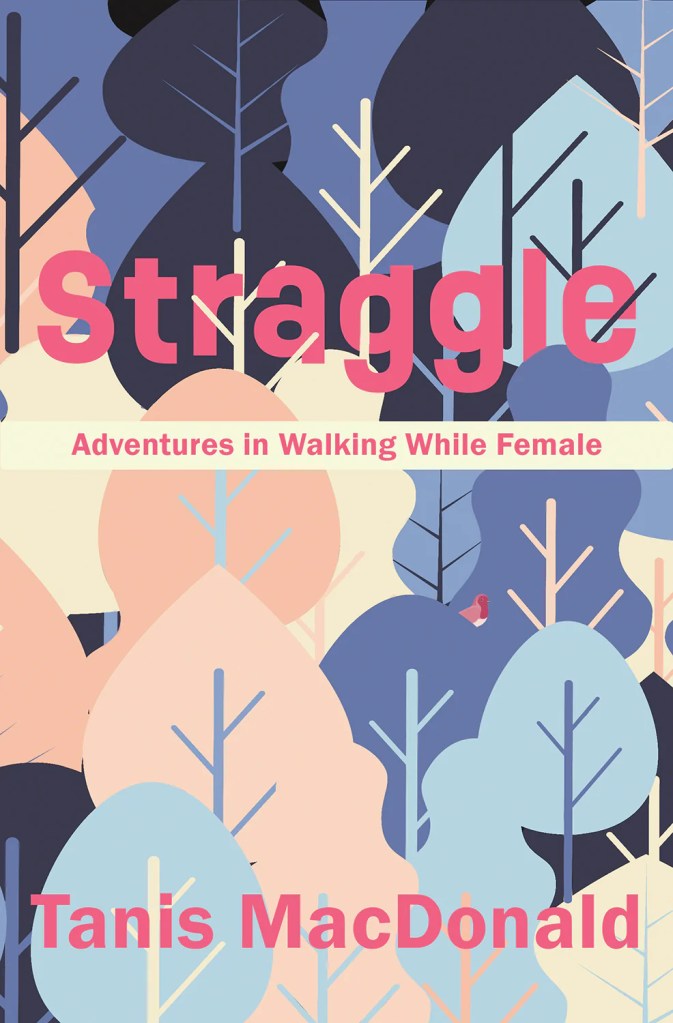
Lauren Elkin provides a response to this limited notion of urban walkers in her book Flâneuse. She talks about the book in this podcast fromLondon Review Bookshop and discusses it with The Irish Times. In Straggle, Tanis MacDonald brings together a number of essays around the experiences of a woman walking in the world. The Mirimichi Reader writes about the book and MacDonald talks to Open Bookabout Straggle.
PEDESTRIAN SPACE
Pedestrian Space is a wonderful resource on a range of topics connected to walking. Created by Annika Lundkvist, Pedestrian Space is an NGO that through media, communications, and research, advocates and educates on walkability as a central aspect of sustainable urbanism. The website has an extensive catalogue of materials, including a reading list, and connections to the Global Walkability Correspondents Network (GWCN), designed to provide opportunities for advocates of walkability and sustainable mobility to connect. There is also a YouTubechannel and an Instagramfeed. I think I’m going to be spending a lot of time in Pedestrian Space.
WANDERLUST
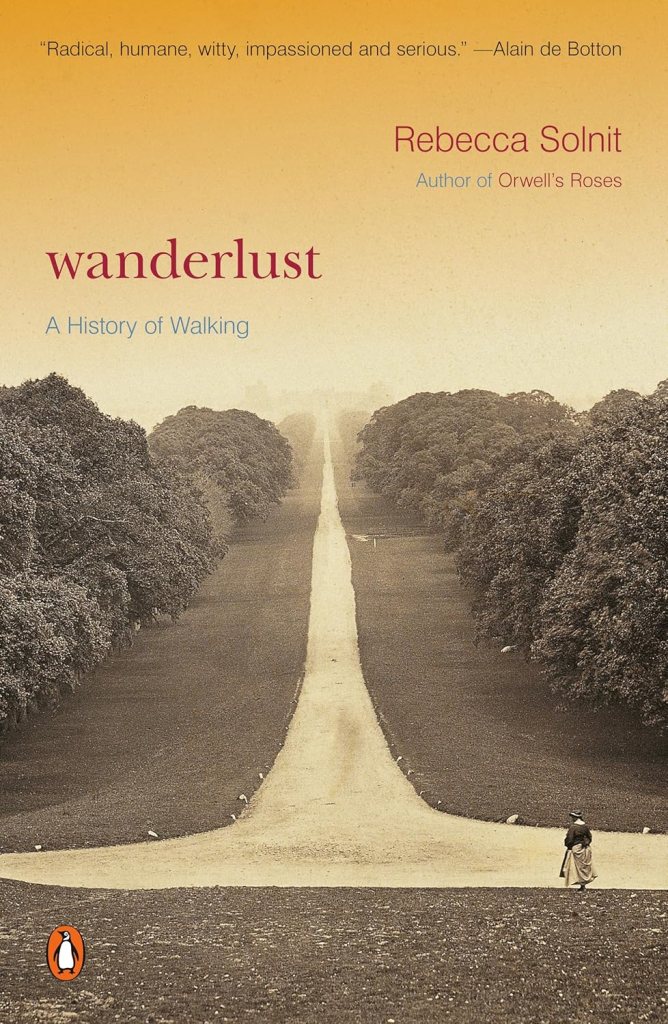
Rebecca Solnit‘s 2001 Wanderlust: A History of Walking is an essential book for anyone interested in thinking about walking. “Where does it start? Muscles tense. One leg a pillar, holding the body upright between the earth and sky. The other a pendulum, swinging from behind. Heel touches down.” Wanderlust is wide-ranging and full of interesting asides and detours, kind of like a good walk.
SHE WALKS IN ENGLAND
Zoe Tehrani is the person behind the website She walks in England, an excellent source of information about walking, with details about routes, tips (e.g. 11 Tips For Hiking In The Rain And Wet Weather), and a blog. She also has an entertaining Instagram feed and a YouTube channel, which chronicle her walks.
TEXT WALKING
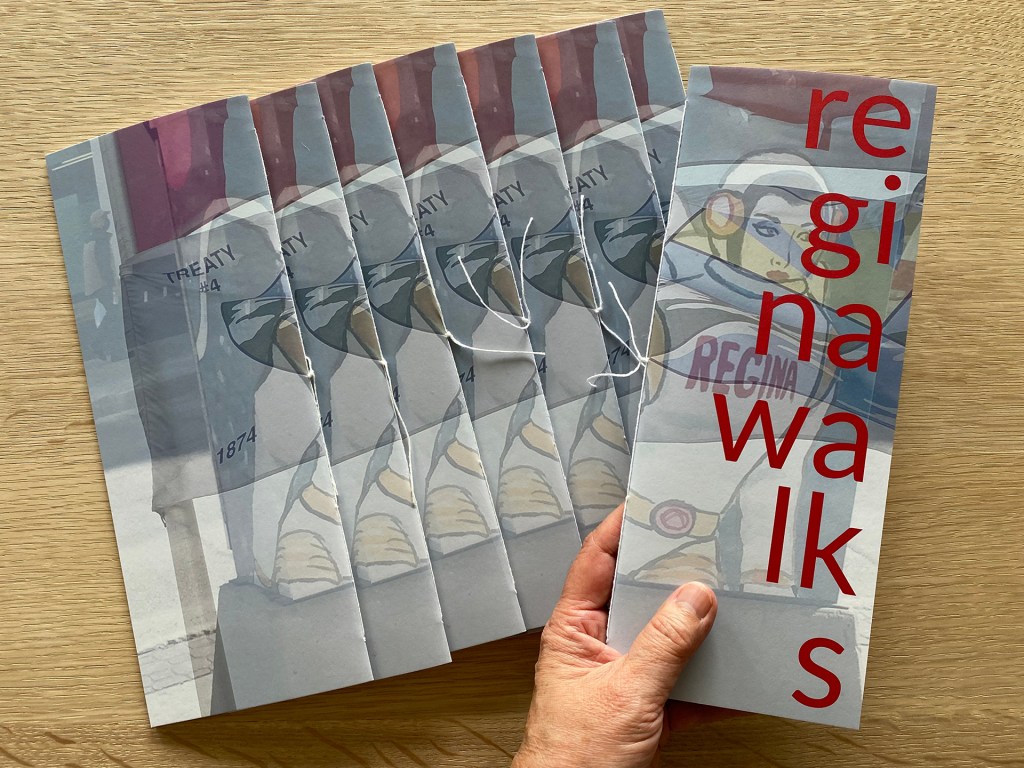
Baco Ohama’s diverse art practice includes the ongoing project Text Walking, where she gathers text found while walking (signs, graffiti, posters) and uses them as sources for poetry, postcards, and videos. I enjoyed working with Baco as a text walker for her Regina Walks at Regina’s Dunlop Art Gallery in 2021.
THE GOOD WALK
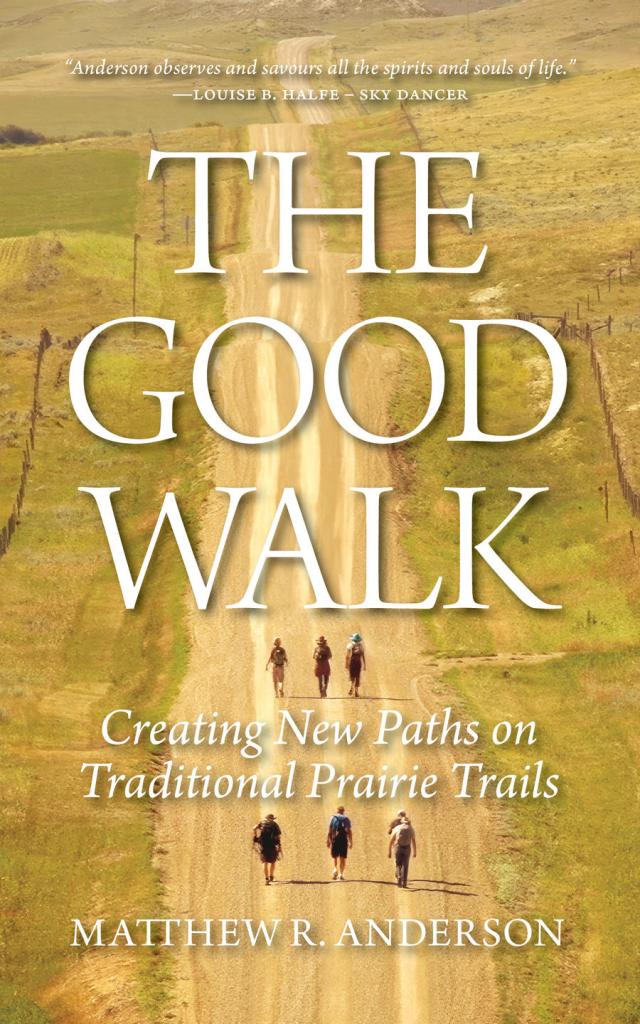
Matthew R. Anderson’s book The Good Walk, published in 2024 by University of Regina Press, tells the stories of settler and Indigenous ramblers who together retrace some of the historical trails of the prairies. Matthew is also the author of Someone Else’s Saint, about a walking pilgrimage that links Scotland and Nova Scotia. You can find more of Matthew’s work on his website something grand.
JOHN ROGERS
John Rogers is a writer, podcaster, and filmmaker, who explores London (and beyond) on foot. the lost byway is a repository for his work including a YouTube channel, which has more than 600 videos, including some with the writer Iain Sinclair, who will be the subject of a future post.
STROLL
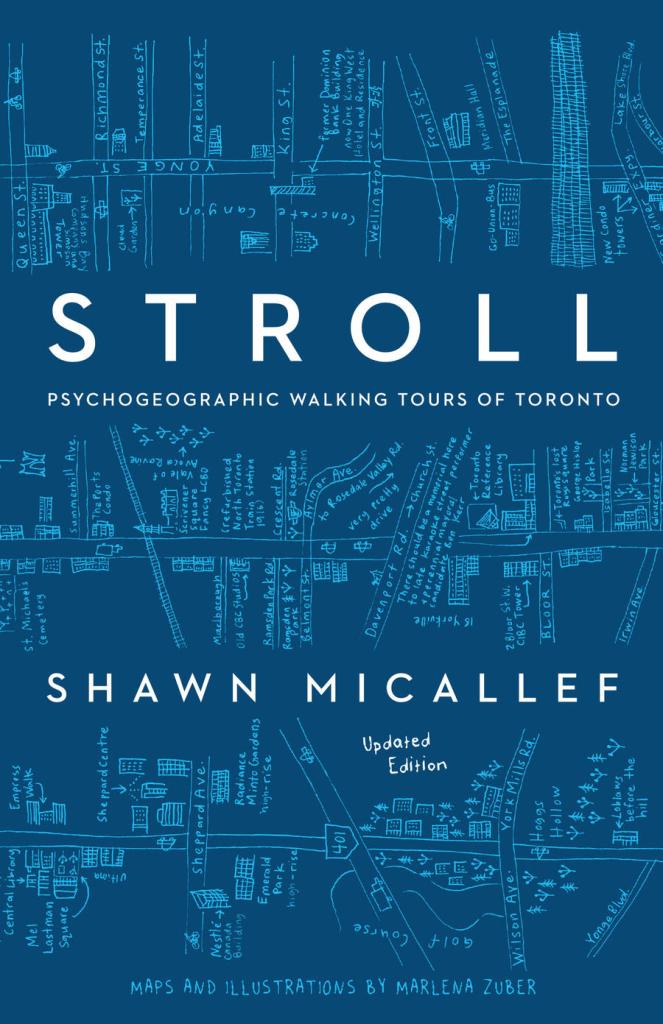
Shawn Micallef’s book Stroll is a walking exploration of Toronto and how the city has developed in intended and unintended ways. Shawn is also the co-founder and a Senior Editor of Spacing magazine, and a contributing columnist to the Toronto Star.
RIGHT TO ROAM
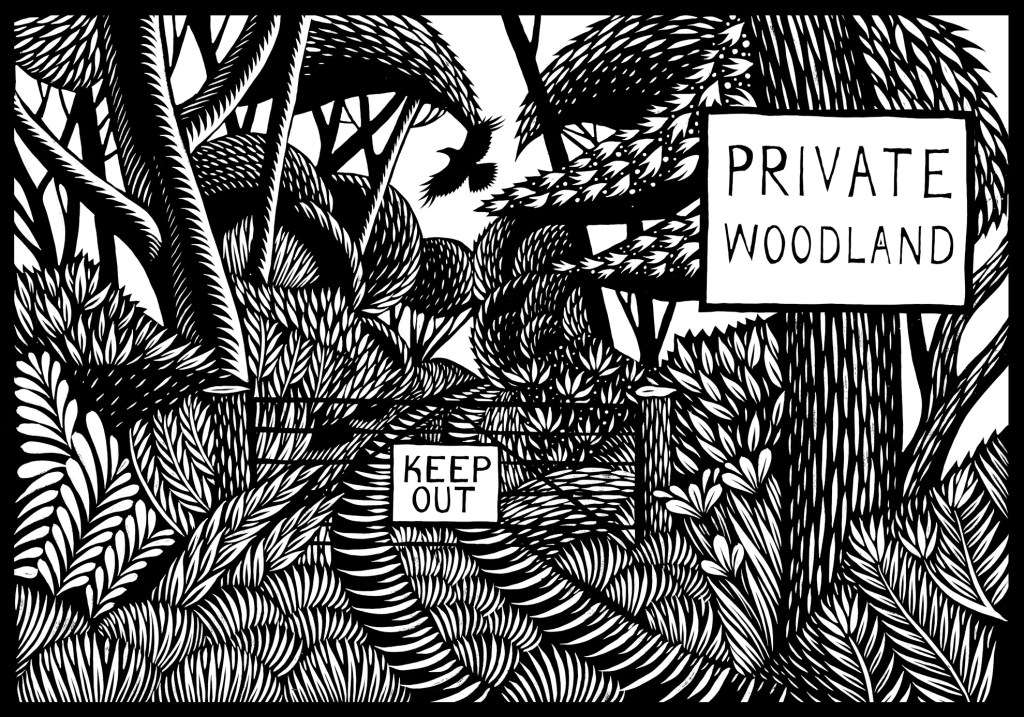
Outside our cities and towns, walking in the countryside is impacted by the legal parameters of the jurisdiction one walks in. In Scotland, walkers have wide access to the countryside, including golf courses (though not the greens). Right to Roam work to restore historic rights for walking in England. Canada prioritizes the rights of private property owners and lessees of public (Crown) lands even when there’s a long, historic record of other people using the land. Matthew R. Anderson (author of The Good Walk) writes in The Conversation about the need for a “right of responsible access” in Canada. Nordic countries provide significant public access to land, with Norway allowing wide access under the concept allmannsretten. Ken Ilgunas looks at the right to access in an American context in his book This Land Is Our Land. Suston magazine provides an overview of access rights in many countries in this article and the podcast 99% Invisible devoted an episode to the topic.
OUT OF EDEN
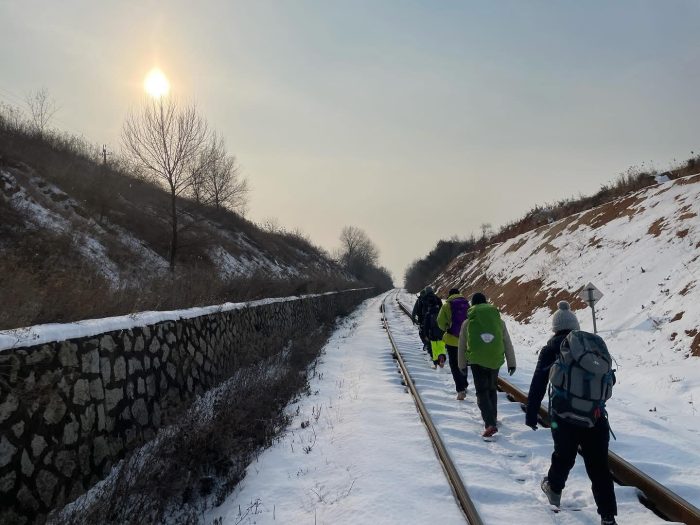
Out of Eden Walk, Paul Salopek’s ongoing 38,000 kilometer trek traces the journeys our ancestors made as they walked out of Africa. You can follow the walk on Instagram, read the journey’s dispatches here, and listen to them on Soundcloud. In October 2025, he reached North America and spoke to the CBC’s Matt Galloway on The Current.
 Project Pedestrian